
Garlic
IN SEASON - Garlic-August, September, October
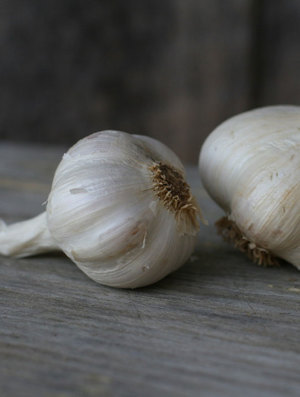
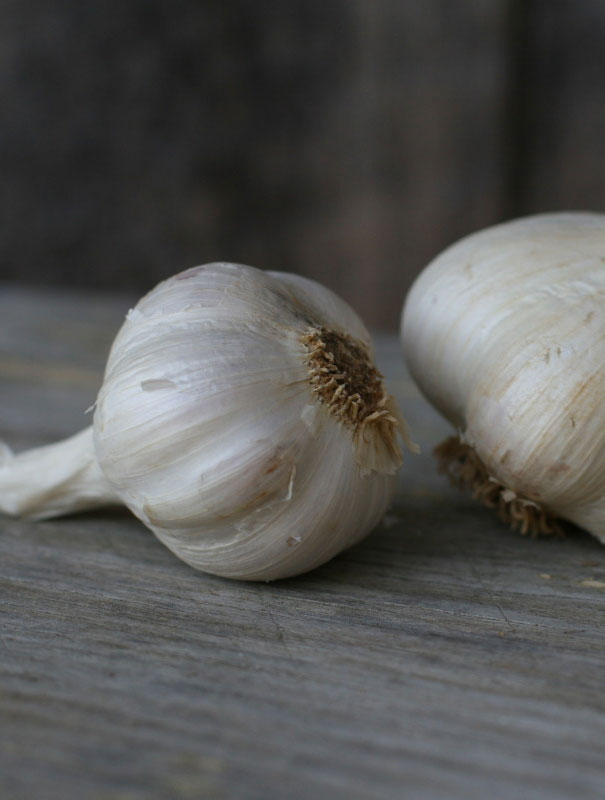
Garlic is arranged in a head, called the "bulb," averaging about 2 inches in height and diameter consisting of numerous small separate cloves. Both the cloves and the entire bulb are encased in paper-like sheathes that can be white, off-white or pinkish. We grow the hard-neck variety of garlic.
STORAGE TIPS
Stored under optimum conditions in a dark, cool, dry place with plenty of ventilation, garlic will last from several weeks to one year. Ideally, try to use fresh garlic within a few weeks and do not refrigerate unless the garlic has been peeled or chopped.
CULINARY TIPS
If you have a good garlic press, you do not need to peel garlic cloves before pressing. Be careful not to brown garlic when sauteing--minced garlic cooks in less than one minute. The more finely the garlic is chopped, the stronger the flavor will be.
RECIPES
Fennel
IN SEASON - June, October
Fennel is composed of a white or pale green bulb from which closely superimposed stalks are arranged. The stalks are topped with feathery green leaves near which flowers grow and produce fennel seeds. The bulb, stalk, leaves and seeds are all edible. Fennel belongs to the Umbellifereae family and is therefore closely related to parsley, carrots, dill and coriander.
STORAGE TIPS
If used within a couple of days after it's bought, fennel can be left out on the counter upright in a cup of water. If wanting to keep longer then a few days, place in the refrigerator in a closed container with a little water. Do not wash fennel bulbs before refrigerating them; the moisture causes them to become mushy.
CULINARY TIPS
Wash fennel stalks thoroughly and use in soups and stews. The feathery leaves can be used as a herb or garnish. The fennel bulb must be washed, trimmed at the base, and then can be sliced as called for in recipes.
RECIPES

Escarole
IN SEASON - June, October
Escarole is a variety of endive whose leaves are broader, paler and less bitter than other members of the endive family. Like radicchio, kale and chard, escarole is a hearty green that thrives late into the growing season. The heart of an escarole head is less bitter because the leaves haven't gotten as much sunlight. High in folic acid, fiber, and vitamins A and K, escarole can be eaten raw or gently cooked.
STORAGE TIPS
Do not store greens in paper bags. Store unwashed with a dampened paper towel in a perforated plastic bag and refrigerate. By changing the towel occasionally and keeping it damp, you’ll be able to store the greens for up to a week. Freezing: Greens freeze well. Wash, then blanch for 3 minutes, drain and plunge into ice water. Chill for two minutes; drain. Pack in freezer containers or bags. Use within 6 months.
CULINARY TIPS
Escarole has crisp leaves with a rather sharp, bitter taste, and should be mixed with other greens when used in salads. The inner leaves are more tender and less bitter. Escarole pairs well in salads with fruit (pears, apples, figs, etc), and strong flavored cheeses.
RECIPES

Photo: Johnny's Selected Seeds
Eggplant
IN SEASON - July, August, September
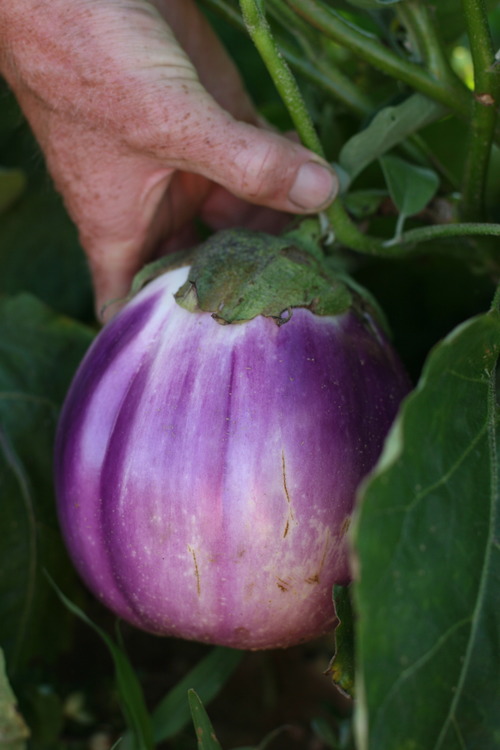
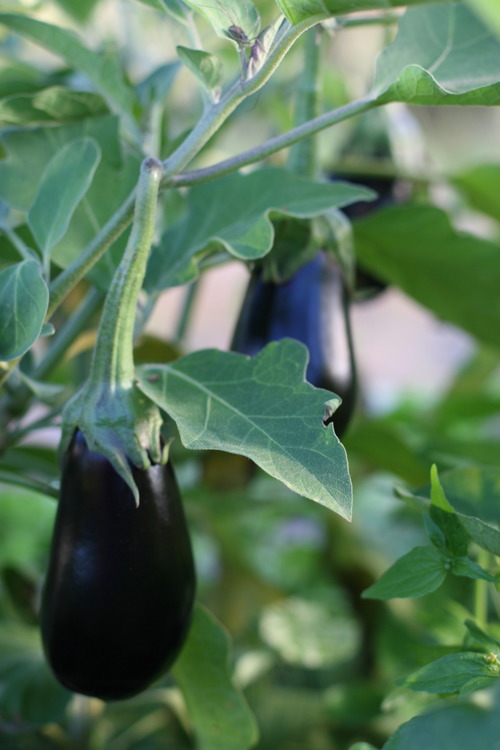
Eggplants belong to the nightshade family of vegetables, which also includes tomatoes, sweet peppers and potatoes. They grow in a manner much like tomatoes, hanging from the vines of a plant that grows several feet in height. We grow several varieties of eggplant, including long Asian, Rosa Bianca, and the traditional black/purple.
STORAGE TIPS
Does not like severe cold, so the front part of the refrigerator where the temperature is around 46°F to 54°F is ideal for storage. Eggplant is ethylene sensitive, so store it away from ethylene-producing produce such as apples. If kept in a plastic bag (to retain moisture,) eggplants will last up to five days.
CULINARY TIPS
Eggplant should not be eaten raw. It may be cooked with or without its skin. Unlike many vegetables, eggplant is not harmed by long cooking. An undercooked eggplant can have a chewy texture; but overcooked eggplant is just very soft. Avoid using aluminum pots for cooking eggplant, as the eggplant will become discolored.
RECIPES
Daikon Radish
IN SEASON - October
The daikon radish, also called the Chinese radish, is a popular Asian vegetable. It is a root that looks similar to a carrot except that it is typically white in color and large in size. For example, a Daikon radish is sized from approximately 5-20 inches in length and 2-4 inches in width. They can be eaten raw; however, they have a hotter flavor than red radishes so be aware of this when using them in this manner. Daikon radishes can be added to salads or to relishes, and are also commonly used in stir-fries.
STORAGE TIPS
Daikon radish will keep well in the refrigerator if they are placed in a sealed container or plastic bag in order to maintain high humidity.
CULINARY TIPS
Can be cooked for a long time without losing its taste and texture. It can be sliced or grated for use in salads and it is also popular cooked or pickled.
RECIPES

Photo: Johnny's Selected Seeds
Cucumbers
IN SEASON - July, August, September
Cucumbers are scientifically known as Cucumis sativus and belong to the same family as watermelon, zucchini, pumpkin, and other types of squash.
STORAGE TIPS
Wrap cucumbers in moist towel in refrigerator for up to one week. If planning on eating them within a day or two after buying them, they should be fine left out in a cool room.
CULINARY TIPS
Refreshing! Cucumbers have a 95% water content--nearly as thirst quenching as a glass of water. Great in any salad, a salad of its own, or chilled soup.
RECIPES

Photo: Johnny's Selected Seeds
Collards
IN SEASON - June, September, October, November
Long a staple of the Southern United States, collard greens, unlike their cousins kale and mustard greens, have a very mild, sweet flavor. While collard greens share the same botanical name as kale they have their own distinctive qualities. Like kale, collards are one of the non-head forming members of the Brassica family along with broccoli and cauliflower. The dark blue-green leaves that are smooth in texture and relatively broad distinguish them from the frilly edged leaves of kale.
STORAGE TIPS
Do not store greens in paper bags. Store unwashed with a dampened paper towel in a perforated plastic bag and refrigerate. By changing the towel occasionally and keeping it damp, you’ll be able to store the greens for up to a week. Freezing: Greens freeze well. Wash, then blanch for 3 minutes, drain and plunge into ice water. Chill for two minutes; drain. Pack in freezer containers or bags. Use within 6 months.
CULINARY TIPS
Collards are very nutritious. They are packed with vitamins, minerals and soluble fiber. Because they are a relatively hardy green with a strong, mildly cabbagy taste, collards stand up well to longer cooking times because the flavor is allowed to mellow.
RECIPES

Guy Lon (Chinese Broccoli)
IN SEASON - September, October
Also known as Chinese broccoli or Chinese kale, guy lon is a slightly bitter leaf vegetable featuring thick, flat, glossy blue-green leaves with thick stems and a small number of tiny, almost vestigial flower heads similar to those of broccoli. Its flavor is similar to that of broccoli, but even sweeter. You can eat the whole thing- leaf, stem, and flowers!
STORAGE TIPS
Do not store greens in paper bags. Store unwashed with a dampened paper towel in a perforated plastic bag and refrigerate. By changing the towel occasionally and keeping it damp, you’ll be able to store the greens for up to a week. Freezing: Greens freeze well. Wash, then blanch for 3 minutes, drain and plunge into ice water. Chill for two minutes; drain. Pack in freezer containers or bags. Use within 6 months.
CULINARY TIPS
The stalks and leaves are often cooked separately, clooking the stalks first, until tender and the leaves until wilted. It's texture when raw or cooked is the same as regular broccoli, making it ideal to use raw in salads, steam cooked as a side dish, and in stir-fry.
RECIPES

Photo: Mypcgarden.ca
Celery Root
IN SEASON - November
Celery root, also called Celeriac, is an edible root vegetable in the celery family. Don't mind its ugly exterior- once peeled, it can be used to flavor soups and casseroles or featured for its own unique flavor!
STORAGE TIPS
Store celery root in the refrigerate for up to a few months- checking periodically for soft spots.
CULINARY TIPS
Do not judge by it's appearance! Once peeled, it is one of the most gorgeously aromatic vegetables and absolutely delicious boiled and mashed on its own or mixed in with potatoes. Like celery and parsley, celery root has a fresh, clean flavor, but the taste is softer and deeper than that of head celery. To trim celery root, start by cutting a slice off the top and bottom. Then slide the knife along down the sides, taking the skin as you go. Make sure you get all the roots at the bottom. You can also use a good peeler.
RECIPES

Cauliflower
IN SEASON - October, November
Cauliflower lacks the green chlorophyll found in other members of the cruciferous family of vegetables like broccoli, cabbage and kale, because the leaves of the plant shield the florets from the sun as they grow. We tie up the heads early in the fall to protect the head. Cauliflower has a compact head (called a "curd"), usually about six inches in diameter that is composed of undeveloped flower buds. The flowers are attached to a central stalk.
STORAGE TIPS
Place in a plastic bag and store in your refrigerator crisper. When stored properly, cauliflower will last up to five days; however, it is best when eaten within three days.
CULINARY TIPS
Great eaten raw accompanied by dips, or cooked as a side dish or added to stir fries, pasta, quiches, omelets, soups and stews.
RECIPES
Coming soon.

Carrots
IN SEASON - June, July, September, October, November
The carrot is a hardy, cool-season biennial that is grown for the thickened root it produces in its first growing season. Although carrots can endure summer heat in many areas, they grow best when planted in early spring and midsummer for fall harvest. They are rich in carotene (the source of vitamin A) and high in fiber and sugar content.
For more than you ever wanted to know about carrots, visit the Carrot Museum website: http://www.carrotmuseum.co.uk
STORAGE TIPS
Remove their green tops. Even if you are going to use the greens later, cut them off and store them separately to keep them from sapping nutrients from the roots. Rinse, drain, and put the carrots in plastic bags and store them in the coldest part of the refrigerator with the highest humidity. They'll last several months this way. To keep the carrots crisp and colorful add a little bit of water in the bottom of the plastic storage bag; this will keep the carrots hydrated. Secondly, you can store carrots in a covered container filled with water to keep them fresh for a long time. Carrots should be stored away from fruits such as apples and pears, which release the ethylene gas that cause carrots to become bitter.
CULINARY TIPS
You can eat the carrot tops! They are edible and loaded with vitamins and minerals. Carrot tops are bitter, but can be eaten raw in salads, or saute them with olive oil, garlic and some of your other favorite greens, or cook them into a soup or stock.
RECIPES

Cabbage
IN SEASON: June, July, September, October, November
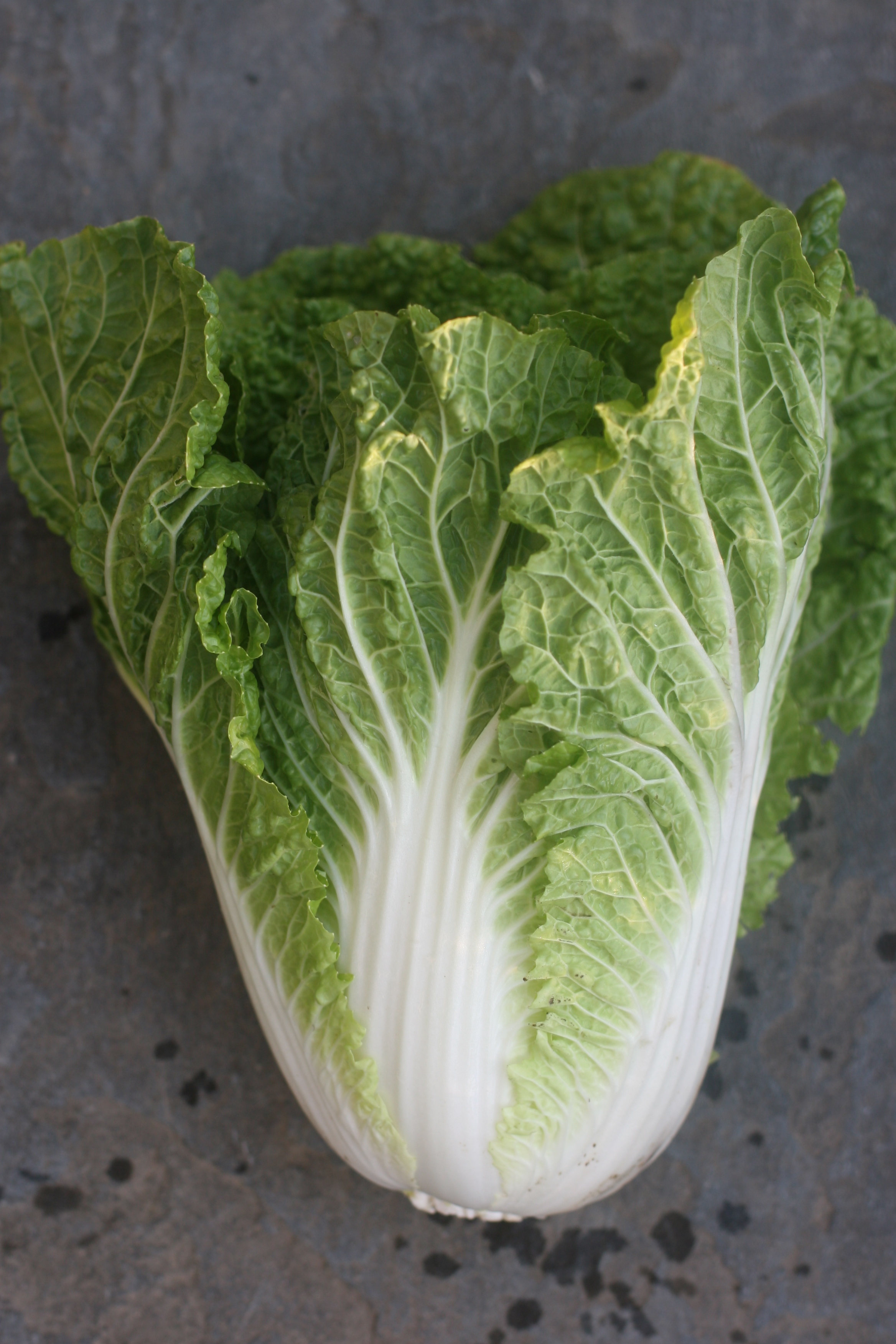
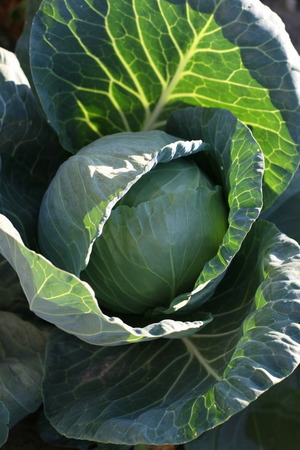
We grow several types of cabbage, include red, green, and savoy. Cabbage is part of the cruciferae family of vegetables along with kale, broccoli, collards and Brussels sprouts.
STORAGE TIPS
Head cabbage stored in a plastic bag in the refrigerator's humid vegetable bin will last at least a week. Savoy and Napa cabbages should be consumed within three or four days.
CULINARY TIPS
Cabbage will lose freshness rapidly once the head is chopped so use within a couple of days of cutting. For salad or coleslaw thinly slice the cabbage and toss with a vinaigrette or make a creamy dressing with plain yogurt, vinegar, honey, dill and salt and add grated carrots or other veggies. Boil cabbage for 5 minutes with chopped onion and add to mashed potatoes.
RECIPES
Brussels Sprouts
IN SEASON: October, November
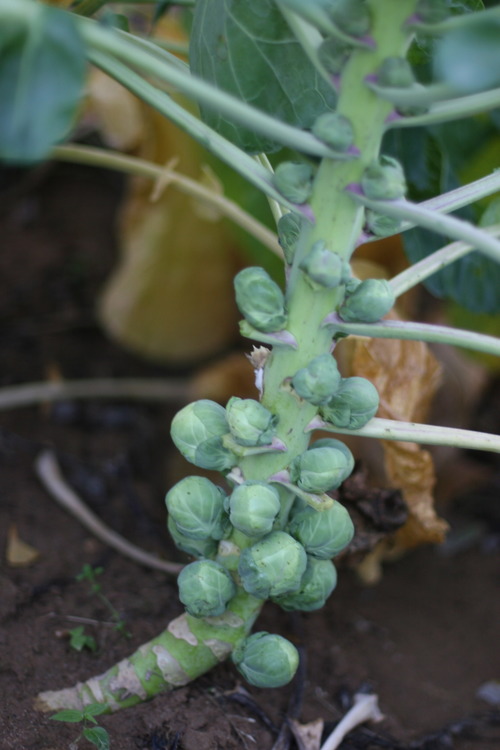
It's no surprise that Brussel sprouts look like perfect miniature versions of cabbage since they are closely related, both belong to the Brassica family of vegetables. Brussels sprouts grow in bunches of 20 to 40 on the stem of a plant that grows from two to three feet tall.
STORAGE TIPS
Keep brussels sprouts refrigerated (32-36°F), storing in a perforated plastic bag to retain moisture.
CULINARY TIPS
Unless they are very small, it is good to slice them crosswise into thirds or quarters and include any whole leaves that have fallen to the side during the trimming--this way they will roast more evenly. Great as a snack, as a meal itself, or how about sliced thin on a pizza over a bed of crumbled gorgonzola-yum!
RECIPES
Broccoli Raab
IN SEASON - October, November
Broccoli raab is a leafy green in the turnip amily. It is also known as Brassica rapa, or broccoli rabe, rapini, rape, and rapa. The plant is cultivated for its tender stalks, florets, and leaves, all of which can be eaten. The bitter, intense flavor of broccoli raab is very popular in Italy and many parts of Asia.
STORAGE TIPS
Keep broccoli raab refrigerated (32-36°F), storing in a perforated plastic bag to retain moisture.
CULINARY TIPS
To prepare raab, blanch quickly in boiling water, drain, then saute briefly until tender in olive oil and minced garlic. Also great in soups and salads. Broccoli raab has a somewhat bitter taste and should be cooked to help mellow that taste.
RECIPES

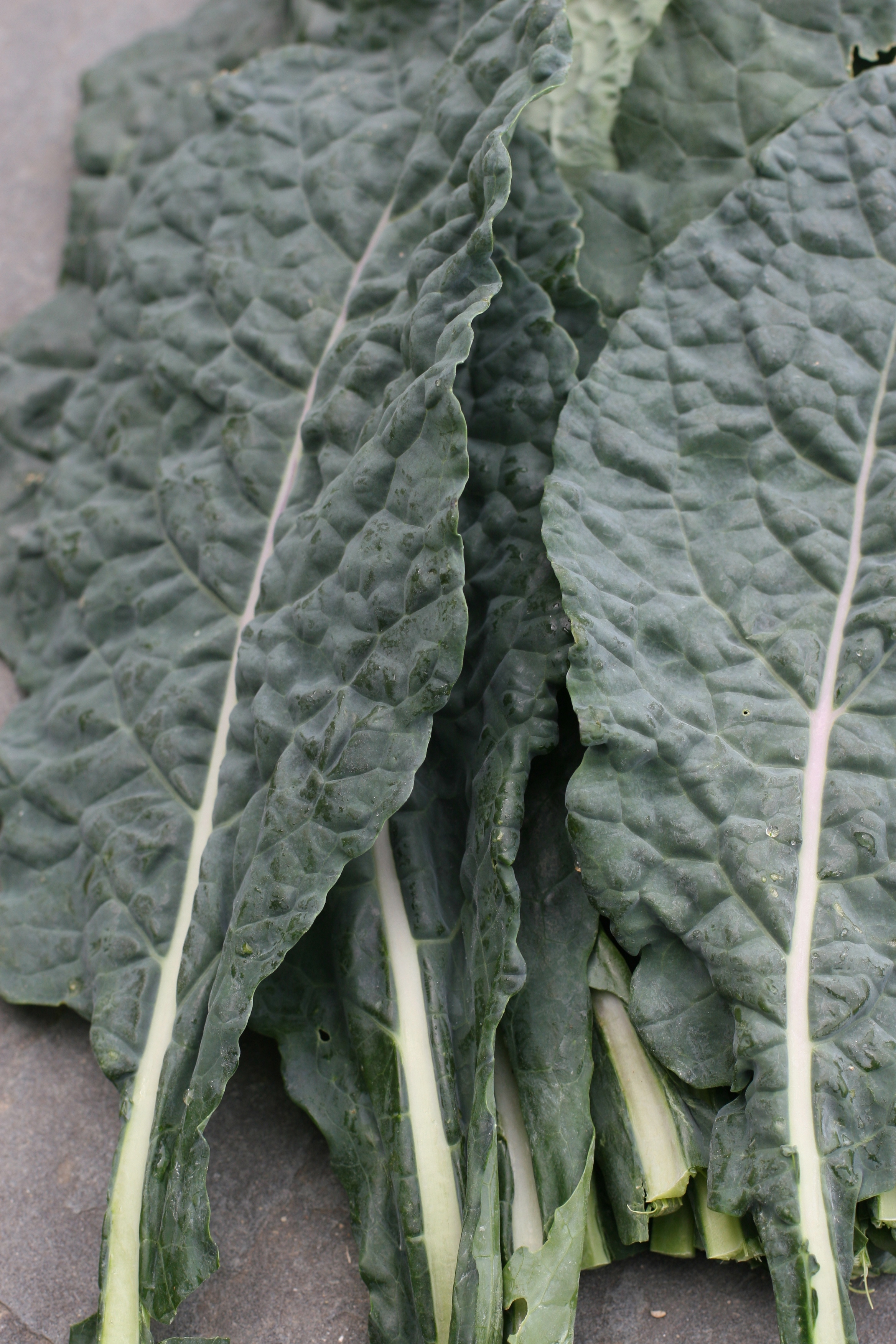
Kale
IN SEASON - June, July, September, October, November
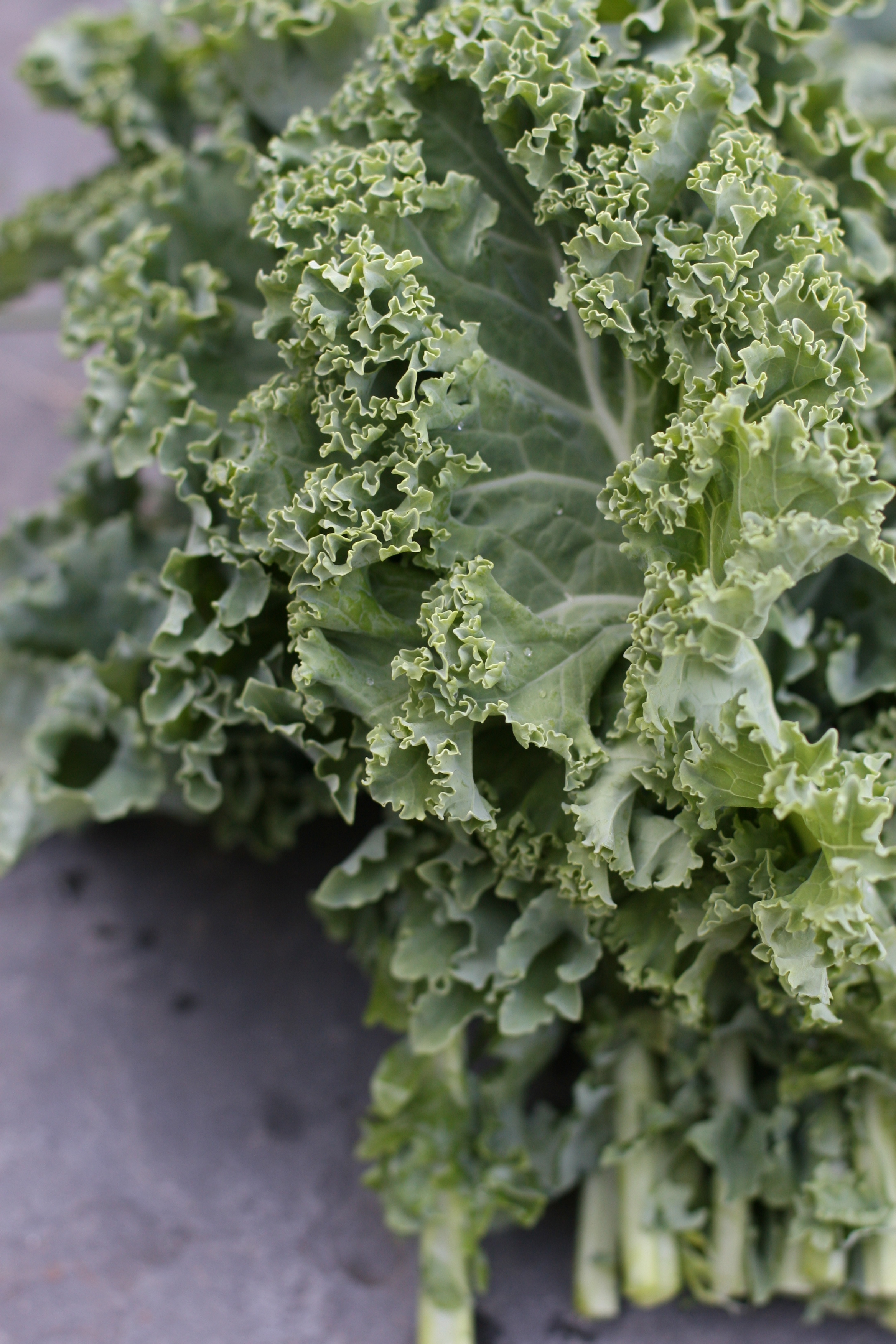
Kale is considered one of the oldest forms of cabbage, and native to the eastern Mediterranean, researchers believe it may have been grown as a food crop as early as 2000 B. C.
CULINARY TIPS
First off, you must be sure to remove the tough stem. To do so, run your knife down either side of the center stem, pull to remove, and discard. Then, coarsely chop the leaves into ribbons or pieces. Secondly, be sure to cook your kale until tender, but not overcooked. This can take a little bit of getting used to, because kale takes a lot longer to cook than most greens. When it's tender and turns a bright green, it's usually done.
STORAGE TIPS
Do not store greens in paper bags. Store unwashed with a dampened paper towel in a perforated plastic bag and refrigerate. By changing the towel occasionally and keeping it damp, you’ll be able to store the greens for up to a week. Freezing: Greens freeze well. Wash, then blanch for 3 minutes, drain and plunge into ice water. Chill for two minutes; drain. Pack in freezer containers or bags. Use within 6 months.
RECIPES
Parsley
IN SEASON - JULY, AUGUST, SEPTEMBER, OCTOBER
STORAGE TIPS
Store in a plastic bag in the fridge. Should last up to a week.
CULINARY TIPS
Great in salads, as an ingredient in ground meat dishes and soups and stews. Works especially well with tomatoes, cucumbers, dried beans, beef, chickens, lemon, garlic, mushrooms, peppers, and squash.
RECIPES
Coming soon.

Broccoli
IN SEASON - September, October, November
Broccoli is a member of the cabbage family, and is closely related to cauliflower. Its cultivation originated in Italy. Broccolo, its Italian name, means "cabbage sprout." Because of its different components, broccoli provides a range of tastes and textures, from soft and flowery (the floret) to fibrous and crunchy (the stem and stalk).
STORAGE TIPS
Store broccoli in a bag in the high-humidity vegetable crisper of your refrigerator for up to three days.
CULINARY TIPS
Broccoli is best when quickly steamed or stir-fried. Overcooking enhances its strong flavor and aroma, dulls the color, and leaches out nutrients. It should be cooked a minimal amount of time until tender, but still crisp; or better yet, raw in your salad!
RECIPES

Radicchio
IN SEASON - June, October
Radicchio is a leaf chicory, sometimes known as Italian chicory. It is grown as a leaf vegetable which usually has white-veined red leaves. It has a bitter and spicy taste, which mellows when it is grilled or roasted.
STORAGE TIPS
Store radicchio in a plastic bag in the crisper of your refrigerator. It will keep for up to a week.
CULINARY TIPS
Great in salads and also grilled. Combines beautifully with citrus, pears, apples, and fresh sweet root vegetables like turnips and carrots. Cut it in half, rinse and drain thoroughly, brush with olive oil and put on the grill--delicious!
RECIPES

Scallions
IN SEASON - June, September, October
Scallions are most commonly referred to as green onions in the United States. They are a variety of young onions with a long, thin white base that has not yet developed into a bulb and long straight green stalks that look like giant chives. Both the white base and the green stalks are commonly eaten.
STORAGE TIPS
Store in plastic bags in the crisper section of the refrigerator. They'll last up to five days. You can also stand them up in a mason jar with water with a loose plastic bag on top in the fridge.
CULINARY TIPS
Always use a sharp knife when cutting scallions to avoid bruising them. Cut off any dried out ends from the dark green tops, trim the root ends, and rinse just before using.
RECIPES

Swiss Chard
IN SEASON - June, July, August, October
Swiss chard, along with kale, mustard greens and collard greens, is one of several leafy green vegetables often referred to as "greens". It is a tall leafy green vegetable with a thick, crunchy stalk that comes in white, red or yellow with wide fan-like green leaves. Chard belongs to the same family as beets and spinach and shares a similar taste profile: it has the bitterness of beet greens and the slightly salty flavor of spinach leaves. Both the leaves and stalk of chard are edible, although the stems vary in texture with the white ones being the most tender.
STORAGE TIPS
Do not store greens in paper bags. Store unwashed with a dampened paper towel in a perforated plastic bag and refrigerate. By changing the towel occasionally and keeping it damp, you’ll be able to store the greens for up to a week. Freezing: Greens freeze well. Wash, then blanch for 3 minutes, drain and plunge into ice water. Chill for two minutes; drain. Pack in freezer containers or bags. Use within 6 months.
CULINARY TIPS
Swiss chard is a quick cooking green that is similar to spinach, though sweeter. It comes with white, red, or golden stems and veins. Cut inch or so off bottom of stems, slice stems and coursely chop the leaves. Saute with oil, garlic, and pepper. Cook stems then stir in leaves as the stems take a bit longer. Sprinkle with salt.
