
Kohlrabi
IN SEASON - June, October
Kohlrabi is a part of the cabbage family, first grown in Europe around 1500 and brought to America around 1800. It has a turnip like appearance, with leaves standing out like spokes from the edible portion, which is a rounded, enlarged stem section growing just above the soil line. The kohlrabi should be peeled first, and then sliced raw in salads, cut into sticks for dip, or you can try cooking it up in one of our delicious KohlrabiRecipes.
STORAGE TIPS
Kohlrabi globes will last a few weeks in the refrigerator, but the leaves are more perishable and should be used within a few days.
CULINARY TIPS
If the skin feels thick or rubbery, you can peel it off with a vegetable peeler, but otherwise you can leave the skin on. Kahlrabi is delicious raw. It can be cut in wedges and eaten as a crunchy snack just like an apple. Serve it with a creamy dip or add a bit of soy sauce to it. Also can be roasted in the oven with a bit of oil and salt until it turns brown and tender.
RECIPES

Garlic Scapes

IN SEASON - June
The scape is the top of the garlic plant-- a delicacy you only get to savor for a few weeks each June, so enjoy! Remove the top head (the bulbous lighter part). The rest is edible. It has a distinct garlic flavor, but it is certainly milder than the cloves. You can cook with it as you would garlic, add it finely chopped into salads, or try one of our several selected Garlic Scape Recipes.
STORAGE
Store in a plastic bag in the fridge for up to 5 days.
CULINARY TIPS
Use garlic scapes as you would scallions or shallots. Blend raw scapes into hummus, bean dips, salad dressing or softened butter to spread over grilled vegetables or baked potatoes. Great to puree for pesto. Scapes are more delicately flavored and sweeter when cooked. They are also great steamed.
RECIPES
Spinach
IN SEASON - June, September, October
We harvest our spinach either as baby size (packed in bags) or when slightly larger in bunches. The smaller the leaves, the more tender, and better for eating raw in salads.
STORAGE TIPS
When you get bunched spinach home, untie it, remove any blemished leaves, trim off the stems, and wash it thoroughly in cold water. Repeat if necessary until you're sure all the grit is gone. Spin dry in a salad spinner or drain well, then put into clean plastic bags very loosely wrapped with paper towels. It will last only two to three days, so plan on eating your rinsed spinach right away. Cold, moist surroundings, as low as 32°F and about 95% humidity are the best for storing spinach. Do not store spinach in same bin as peaches or apples as these fruits emit ethylene, an odorless gas which will turn greens yellow and limp.
CULINARY TIPS
Tender, fresh spinach is delicious in salads, pasta, soups and dips and is an easy, healthy addition to many meals. So many ways to eat it raw or cooked! Great for green smoothies or juicing.
RECIPES

Peas - Sugar Snap
IN SEASON - June
Sugar Snap Peas, also known as mange tout, meaning to 'eat everything' in French, are an early summer favorite. Unlike many other varieties of pea, you can eat the peas and the pod, but the tough stem must be removed. To remove the stem on the pea, snap off the top and remove the attached string that pulls off down the side of the pea. I like to eat them lightly blanched (which brings out their sweetness and bright green color!) and salted. To blanch them, boil a small pot of water, drop in the peas for just 1-2 minutes, and then remove immediately. They should be bright green and still a little crunchy.
STORAGE TIPS
Keep snap peas refrigerated (32-36°F), in a perforated plastic bag.
CULINARY TIPS
Sugar snap peas are generally eaten whole and are delicious raw or cooked. If cooking, steam, simmer, or stir-fry only for a minute or two to retain their crispness, color, and flavor. Perfect just to snack on raw, thrown into your salad, or with your favorite vegetable dip.
RECIPES

Strawberries

IN SEASON - June
STORAGE TIPS
Eat right away or refrigerate to prevent decay. Fresh strawberries will only last 1 day in the fridge.
CULINARY TIPS
Coming soon.
RECIPES
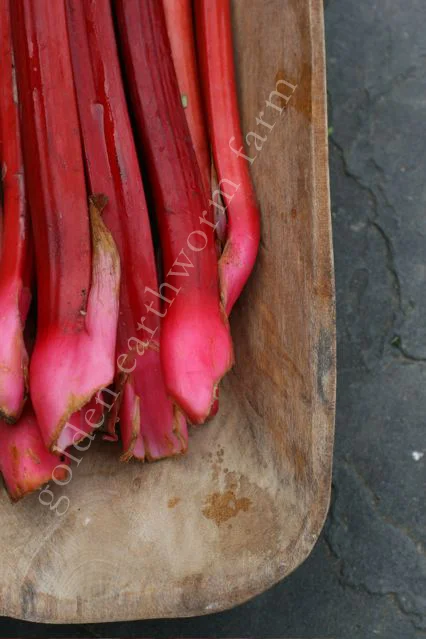
Rhubarb
IN SEASON -
Rhubarb is a very old plant, dating back to 2700 BC in China where it was cultivated for medicinal uses. Today, rhubarb (also known as pie plant) is often used in pies, compotes, muffins and cakes.
STORAGE TIPS
Rhubarb will keep up to a week when stored in a plastic bag in the fridge.
CULINARY TIPS
Coming soon.
RECIPES
Turnips - White Salad

IN SEASON - June, September, October
Our White Salad Turnips are a Japanese variety known as "Hakurei". These little white roots are surprisingly juicy and sweet! They are often eaten raw sliced in salads, although they also make a wonderful appearance in stir-fries and soups. (They do not need to be peeled, just gently washed.) The greens are edible and have a wonderful flavor when lightly steamed or sauteed.
STORAGE TIPS
Store the roots and the greens separately. They should both be put into plastic bags and kept in the fridge.
CULINARY TIPS
White salad turnips have a sweet, crunchy bite and are a perfect addition to any salad.
RECIPES
Radishes
IN SEASON - June, September, October, November
This root vegetable is a relative of the turnip and horseradish. The elongated pink and white roots are usually eaten raw as an appetizer or in salads, and the leaves are usually not edible.
STORAGE TIPS
Our radishes come with the greens still intact, so we recommend that you separate the two when you get home. Radishes will last up to two weeks inside a plastic bag in the crisper section of the refrigerator.
CULINARY TIPS
Most of the hot taste of radishes is in the skin, so you can peel them for a milder flavor.
RECIPES

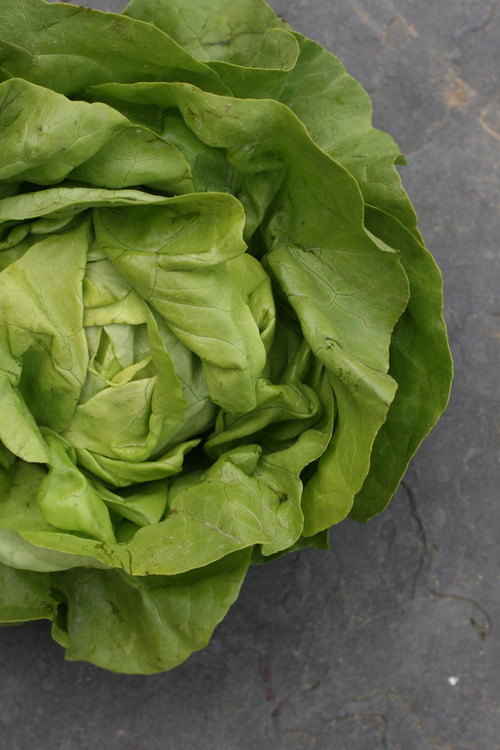
Lettuce
IN SEASON - June, July, August, September, October
We grow many different varieties of lettuce, including Red and Green Boston (Butterhead or Bib), Red and Green Romaine, Red and Green Batavian, Summer Crisp, and Lettuce Mix (a selection of 4-5 of our favorite baby varieties). Lettuce is most often eaten raw as salad.
STORAGE TIPS
Lettuce will perish quickly if not stored properly. Lettuces like moisture and cool temperatures, so store lettuce in perforated plastic bags wrapped in damp paper towels, and keep in the refrigerator vegetable crisper. Salad greens should not be stored near fruits that produce ethylene gases.
CULINARY TIPS
Lettuce leaves should be torn by hand as cutting will turn edges brown faster. The outer, greener leaves of lettuce contains the most vitamins and minerals. It would be wise to invest in a salad spinner to remove excess water after rinsing your greens!
RECIPES
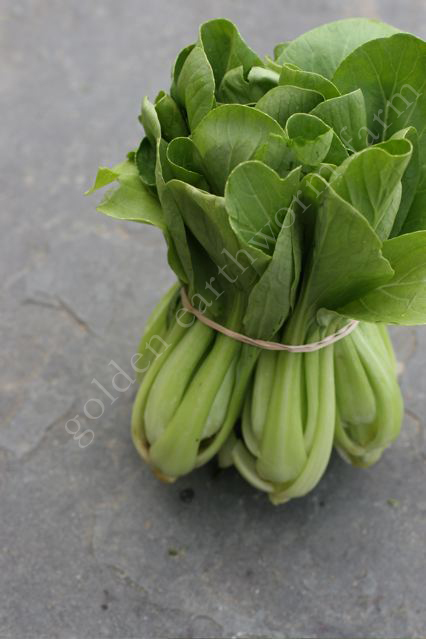
Bok Choi
IN SEASON - June, September, October
Bok Choy is a Chinese leaf vegetable commonly used in Asian cuisine. The vegetable is related to the Western cabbage and is of the same species as the common turnip.
STORAGE TIPS
Keep bok choy refrigerated (32-36°F), storing in a perforated plastic bag.
CULINARY TIPS
Both the stalk and the leaves can be eaten raw, or cooked. Whether they're stir-fried, gently steamed or added to soup, Bok Choy is easy to prepare and a nutritious addition to meals. Separate the leaves from the stalks, as the thicker stalks take longer to cook. Rinse well and drain, then shred or cut across the leaves, and cut stalks into small slices along the diagonal, saute with a small amount of water or chicken stock.
RECIPES
Beets
IN SEASON - June, July, August, September, October, November
Both the beet root and the greens are edible. Beet roots are often roasted or boiled, or can grated raw in salad, and the tops can be cooked like swiss chard or spinach. Nutritionally speaking, beets are exceptional sources of essential vitamins and minerals. They are rich in calcium, iron, magnesium, potassium, vitamin C, thiamin, riboflavin, vitamin A and vitamin K. Beets store most of these nutrients in their leaves.
STORAGE TIPS
Remove the tops (leaving any top on root vegetables draws moisture from the root, making them loose flavor and firmness). Beets should be washed and kept in an air-tight bag in the fridge.
CULINARY TIPS
You can boil, bake, or steam your beets. Also, raw beets can make a salad extra tasty. Simply wash and peel then grate into salad.
RECIPES

Arugula
IN SEASON - June, July, September, October, November
This peppery green, also known as rocket, roquette, rugula and rucola, is a member of the mustard family.
STORAGE TIPS
Keep arugula refrigerated, stored in a perforated plastic bag, away from fruits to avoid deterioration. Best eaten within a few days.
CULINARY TIPS
The leaves are mostly eaten raw in salads, although sometimes gently cooked or pureed in sauces and pestos.
