
Welcome to the second week of CSA and the first for our Biweekly B members! In the early season, you can expect lots of leafy greens and early season roots in the shares. We harvest what's at its peak in the fields each week, just what we should be eating seasonally in our climate. Our vegetables are nutrient-dense and packed with flavor and nutrition! Bon appetit!
Here's to a wonderful season of sharing the harvests!
Maggie & Matt
What's in season this week?
For weekly members, you may be seeing a return of some of last week's favorites, as we try to distribute the much-loved items to both weeks A and B. Next week you'll see an entirely new selection.
Baby Bok Choi
These little heads of tender stems and dark leaves will be one of the fastest things you'll cook all week. Halve them lengthwise and sear the cut side in a hot pan, or toss whole into a stir-fry in the last two minutes — the stems stay snappy and the leaves wilt down. A splash of soy, a little garlic and ginger, done. It's a cruciferous powerhouse like its cousin kale: a real standout for vitamins A, C, and K, with a good hit of folate and calcium. Great in a brothy noodle bowl too.
Storage: Store in an air-tight container in the fridge
Cilantro
For me, this is one of the best flavors of summer. I love it showered over tacos, stirred into a pot of black beans at the very end, or blitzed into a bright chimichurri or green chutney. Bonus: it's loaded with vitamin K and vitamin A, plus the antioxidants that give it that clean, herbaceous kick.
Storage: Trim the stem ends and stand the bunch in a glass with an inch of water, loosely tented with a bag in the fridge — it'll perk up and last for up to 5 days.
Japanese Salad Turnips
These are delicious eaten raw. They are crunchy and juicy! No need to peel, just wash, slice and sprinkle with flaky salt. The tops can be cooked like spinach. One of my favorite greens! If you prefer to cook them, try them braised (recipe below).
Storage: Separate the roots from the greens before storing in an airtight bag in the fridge
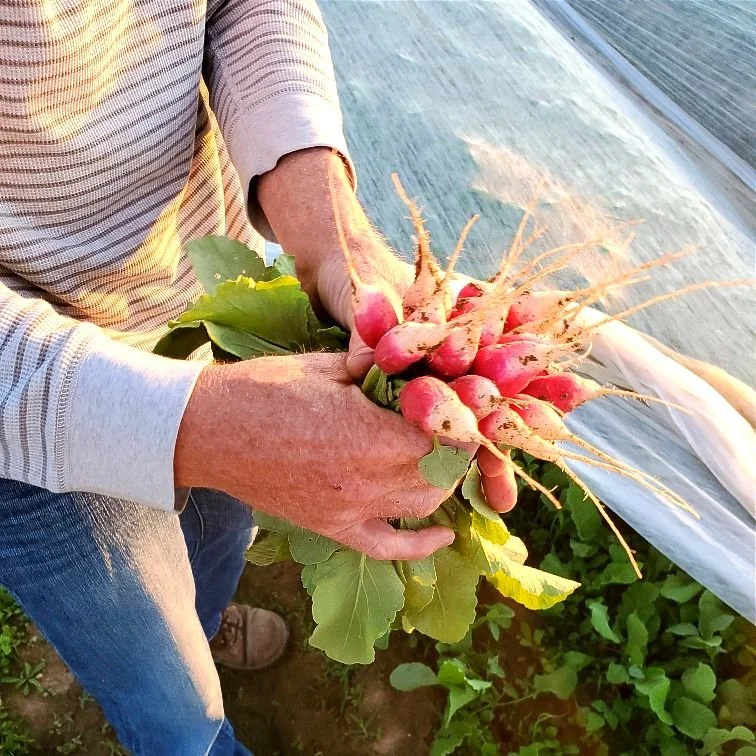
French Breakfast Radishes
These are a sweet and delicate variety of radish. A real early season delicacy!
Storage: Separate the roots from the greens before storing in an airtight bag in the fridge
Baby Spinach
We're known for our amazing flavored spinach. It's all about the perfectly balanced soil! No metallic taste, just sweetness! It will cook in just a few minutes, it's so tender.
Storage: Store in an air-tight container in the fridge
Toscano Kale
Toscano (you might know it as dinosaur or lacinato kale) has those dark, bumpy, blue-green leaves that stay silky instead of tough, and the flavor is deeper and sweeter than curly kale. As a family we go through 2 bunches at each meal! Sauté it with garlic as an easy side (perfect alongside eggs for breakfast), drop it into a Tuscan white bean soup, fold it into a frittata or quiche, or toss it with pasta and sausage. Sliced thin and massaged with a little olive oil and lemon, it makes a salad that actually holds up overnight. Just strip out the tough center rib first. And it earns its reputation: one of the most nutrient-dense greens around, with off-the-charts vitamin K, loads of vitamins A and C, plus fiber and calcium.
Storage: Store in an air-tight container in the fridge
Red Boston Lettuce
Sweet early season lettuce. Do not dress with a heavy dressing! These lettuces deserve just the perfect light vinaigrette. My go-to recipe is below.
Storage: Store in an air-tight container in the fridge
WILTED VEG?
The summer heat can wilt your greens fast if left out to dehydrate. You can revive almost any wilted green by dunking it in a large bowl of ice cold water. Let it sit for up to 20 minutes, shake off and store in the fridge.
HOW TO STORE YOUR VEG
Leafy greens need to be stored in an air-tight bag or container -- something to keep in the moisture. Plastic produce bags like these work well. I aim for a plastic-free kitchen and love my Vejibags. They're an investment, but last a lifetime.
CSA Kitchen Notes...
A NOTE ON COOKING YOUR CSA
If you're not a big cook, you may initially feel overwhelmed by the quantity of produce in your share. Remember that a single box is sized to feed 1-2 people for the week if you eat the USDA recommended serving of vegetables each day. (The majority of the population misses this mark by a long shot.) Each week in the newsletter I'll share my favorite farmhouse recipes, and ideas to incorporate more fresh produce in your daily diet.
APPETIZER PLATTERS
Every evening I put together a few treats to snack on while dinner is being made. Our kitchen is the gathering spot at the end of a long day, and I can guess that yours is probably too. Tonight I put out a small bowl of kalamata olives, a bowl of dry roasted pepitas, and sliced salad turnips topped with flakey salt. They were gone in about 5 minutes. Remember that not every vegetable needs to be made into a meal. Sometimes simple is best.
THE MIGHTY SALAD SPINNER
If there is one kitchen item that every CSA member needs to have, it's a salad spinner. I personally own 3 of them and use them constantly. If you remove the inner basket, you can wash your greens in the bowl. It's also a great place to soak wilted greens to bring them back to life. After washing, you'll spin dry your greens, and you can even store your washed greens in the spinner in the fridge. I often wash my salad or cooking greens in the morning so they're ready to go when I get home and start dinner.
This is the one I have. Here's an inexpensive version with good reviews. Go get one. Or two.
Recipes from our Farmhouse Kitchen
Braised Salad Turnips
The best Salad Vinaigrette - A keeper!
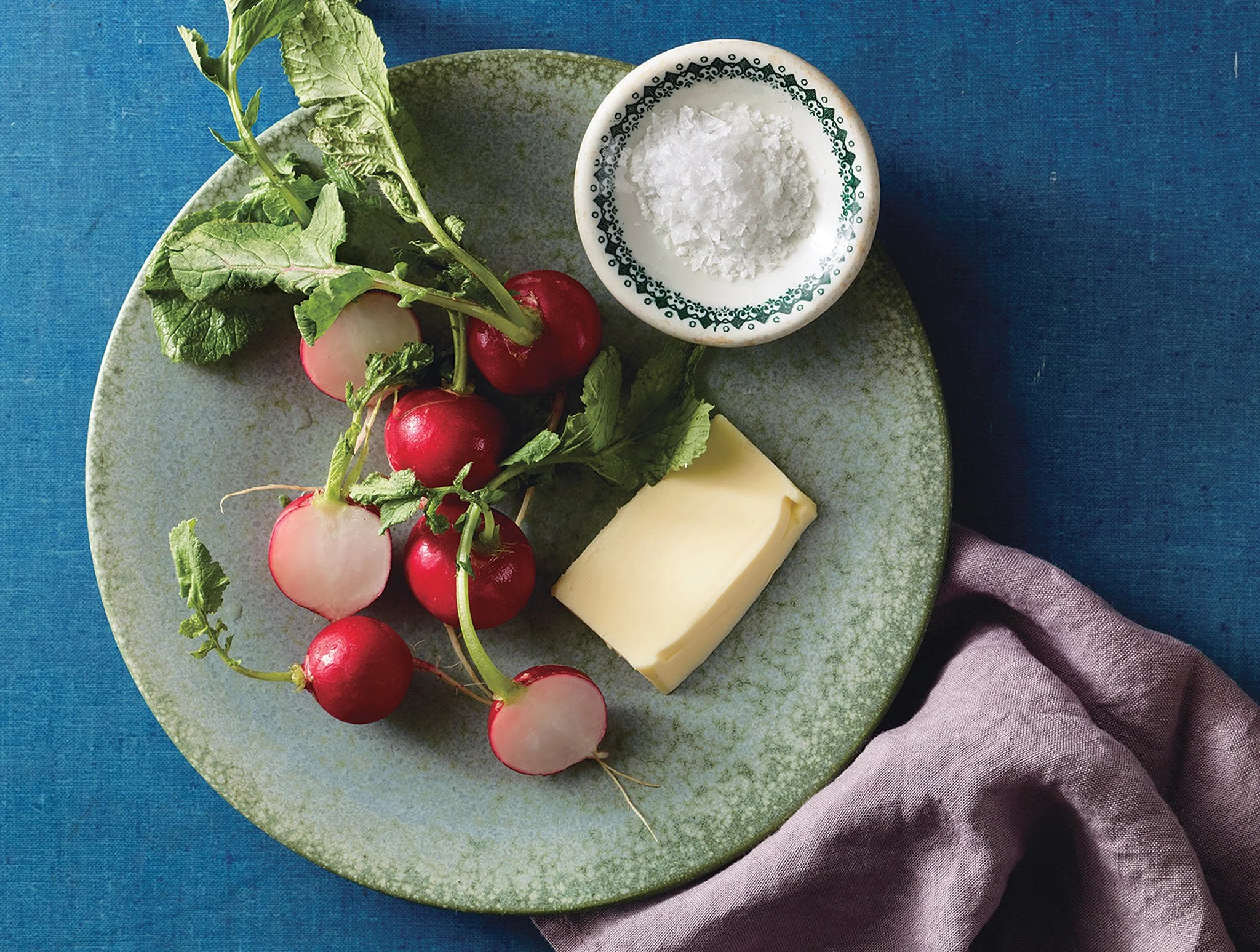
French Breakfast Radishes with Butter & Salt - A classic!
Easy Stir-fryed Bok Choi
Cilantro Chimichurri Sauce
Tuscan Kale & White Bean Soup - A favorite!